Hiring advice from Profiles to help employers attract, recruit, and retain top creative, marketing, and tech talent. Tips from staffing experts.
Time to read: 4 minutes
Back to Normal and the Workforce Summary:
– The discussion around taking work back into the office is happening. However, the way we use to work will look significantly different from the ever-so-trendy open workspace changing to a more closed off setup.
– Networking and business travel will resume, eventually, but will be closely assessed and monitored.
– Companies are still trying to generate leads and continue with business as usual while also working to be a compassionate partner and resource to their customers.
Time to Read: 16 minutes
– 16 vetted technologies to help automate your recruitment process.
– We’ve taken all the demos. Here is your comprehensive guide to their benefits and capabilities.
– How to set your team up for success with an optimized technology stack.
Time to read: 5 minutes
A Strong and Sustainable Workforce Summary:
– Sustainability is important for the environment as well as businesses and sets society up for success in the future.
– Profiles seamlessly moved its business remotely through prior sustainability efforts.
– How can you create a sustainable workforce to withstand future roadblocks?
Time to Read: 5 minutes
Virtual Team Building Summary:
– Before COVID-19, remote work is touted as a preferred method of work with employees citing better productivity, loyalty, and more likely to refer potential employees. However, with staff not in office, how do business leaders keep the workforce engaged on a human level?
– Leadership and company culture is the foundation for building a strong remote staff and must be established and lived by.
– Virtual Happy Hours are the most widely practiced form of virtual team building, however, we touch a couple more ideas that will break up the workweek.
Time to read: 6 minutes
Business Planning for Alleged Second Wave of Coronavirus Summary:
– As the US Government starts to entertain the idea of re-opening, public health officials warn and hypothesize the second wave of coronavirus is in store.
– What can we compare and learn from the Flu Outbreak of 1918?
– Should public health predictions be true, now is the time for businesses to re-evaluate initial approaches in response to COVID-19 to be better positioned in the event of a second wave.
Time to read: 6 minutes
Hiring Regulations During COVID-19 Summary:
– Clarification on hiring regulations through the EEOC.
– Understand what employers can and cannot do when hiring during a pandemic as explained in the Pandemic Preparedness in the Workplace and Americans with Disabilities Act.
– What steps employers can take to keep their workforces safe and healthy – remote and on-site.
Time to read: 3 minutes
COVID-19 Tax Deadline Extension Summary:
– When are 2019 federal and state taxes due?
– Will this affect my tax refund?
– Should I wait to do my taxes?
Time to read: 5 minutes
Impact on Creative and Marketing Hiring During COVID-19
– Is now the time to job search, especially in the creative and marketing niche, despite news of massive layoffs and furloughs?
– In regards to marketing and creative technology jobs, the marketing discipline continues to see a steady flow of opportunity for job seekers.
– Consumer behavior has changed in the wake of COVID-19, which continues to keep CIO and CMO ears perked and focused on digital spending.
Time to Read: 2 minutes
– Staffing Industry Analyst released an assessment on April 6, 2020 on how COVID-19 will impact the workforce.
– The short term and peak of the coronavirus pandemic is estimated to be two to six months in which businesses and the workforce will be impacted.
– While specific industries will see demand through this pandemic it does not equate to increased investment as consumers are seeking cost savings and businesses need to reduce costs.
– How will industries fare in the recovery period? Can 2021 be business as normal?
CARES Act Summary
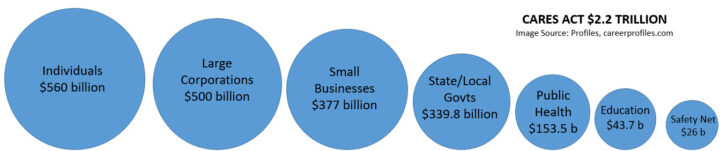
– Coronavirus Aid, Relief, and Economic Security (CARES) Act was passed on March 27, 2020.
– The CARES Act is not a stimulus but a relief. What is the difference?
– Allocation of the $2.2 trillion across individuals and businesses illustrated and explained.